 NAEXYS
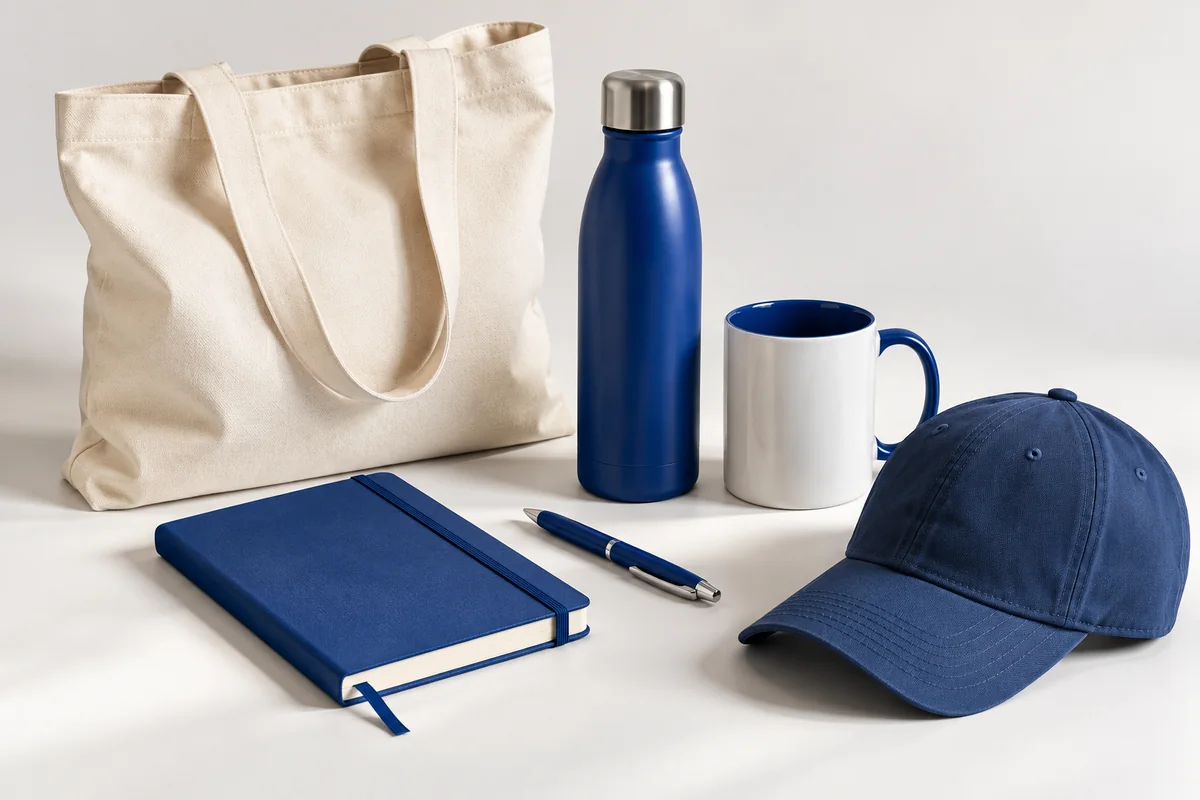
Five criteria for choosing promotional products
Start with the person receiving the product and the situation in which they will use it. Then compare five criteria: usefulness, purpose, quality, branding and the full project cost. Shortlist products whose use you can explain in one sentence, then check the finished result and delivery arrangements.
Find a place in your audience’s everyday life
Before browsing products, ask a simple question: when will this item be used? A notebook might be useful in meetings or a team welcome pack. A reusable bottle might suit people on the move. A tote bag could carry purchases or event materials. Test these ideas against your audience’s actual routines.
The right choice depends on the recipient. Consider their habits, how the product will be handed over and how they will carry it away. An item that looks appealing in a catalogue may be less suitable for your event or shop. Intended use is a useful starting point for narrowing the selection.
Use this comparison to narrow down a shortlist rather than rank products from best to worst. If recipients already own the item or cannot easily carry it home, consider another option. For employee onboarding, also look at how the products work together as a welcome pack.
| Product to consider | Use to check against your audience’s needs | What to check before choosing |
|---|---|---|
| Branded notebook | Taking notes in meetings, training sessions or during onboarding. | Size, paper, opening, fit in a bag and the branding finish. |
| Branded water bottle | Travelling or commuting, where the recipient already uses a refillable bottle. | Capacity, lid, cleaning, portability and food-contact specifications. |
| Branded mug | Use at a desk or somewhere a mug can be kept between uses. | Grip, storage, care and protection during delivery. |
| Branded tote bag | Carrying shop purchases or event materials. | Usable dimensions, handle length, seams and the intended load. |
Match the product to its purpose
Branded products serve different purposes. A corporate gift, an item sold in a shop and a giveaway for a large audience each have their own requirements. Decide what you want to offer: a thoughtful gesture, a useful accessory, a collectable piece or a way to make your brand visible.
For a project with several products, ask whether each has a distinct purpose. A coherent selection is more useful than adding items simply for variety. Build a set around a shared use or a few visual details that connect the pieces.
Think beyond adding a logo
Branding matters, but identity can also come through colour, shape, material, finishing details or presentation. For a notebook, consider the cover and how the logo will look. For a mug, the shape and colour palette can contribute to the design. The options available will be confirmed for the product and production process.
Gather visual references, brand guidelines and essential brand assets. Explain whether you want a subtle finish, a bolder presence or a particular creative direction. A clear intention makes it easier to compare options without assuming that every type of customisation is available on every product.
Compare the full project cost
The unit price does not tell the whole story. To compare two proposals, check what each includes: quantities, products, customisation, packaging, any samples and delivery. A useful comparison starts with the same scope and expectations.
Then set your priorities. With a fixed budget, you can discuss the number of product references, quantities per item, degree of customisation or presentation. The aim is to balance the product, its purpose and your brand image in a proposal that is easy to understand.
Plan approvals before you start
Identify what needs approval before moving forward: artwork, colours, branding position, dimensions or packaging. If samples are being considered, agree on the arrangements and any cost. This helps establish the expected result before production decisions are made.
Unsure which products to choose? Tell us about your audience, budget and target date. At NAEXYS, every enquiry receives personal attention so we can develop a selection and customisation approach that suit your project. The website gallery offers examples, rather than setting limits on what is possible.
Avoid common product selection mistakes
Avoid choosing on price alone, adding products without a clear use or approving a result from a small image. Ask about dimensions, materials, branding methods and delivery scope. For reusable bottles, clothing or products intended for food contact, have the relevant specifications and documents confirmed for the intended use.
If you want to make a more responsible choice, ask for verifiable information about composition, origin and product characteristics. A word such as “eco-friendly” is no substitute for those details. The most suitable choice considers the intended use and the features that have actually been confirmed.
ADEME recommends questioning the usefulness of a communication initiative and supporting its messages with evidence. For product selection, this means defining the need, the required specifications and the supporting documents before making a claim.
Your pre-approval checklist.
- Audience and use: specify who will receive the item, when it will be handed out and how it will be carried.
- Purpose: give each product a distinct role in the selection.
- Quality: review dimensions, construction and the specifications relevant to the intended use.
- Branding: approve the artwork, colours, placement and actual decoration size.
- Budget and timing: compare products, decoration, packaging, any samples and delivery on the same basis.
Sources and further reading.
For your project: Promotional products · Corporate gifts · Event merchandise
Explore our merchandising studio’s expertise and the products you can customise.
Your project deserves a personal response.
Let’s talk about your project